In short
Tracy AI Interviewer runs customer interviews from one link: say what you want to learn, she drafts the guide, customers answer when it suits them.
To run them yourself: one question, six to eight open questions about the last time it happened, a follow-up on every short answer, then read for reasons that repeat.
Surveys show what people chose, not why, and booking twenty calls takes two weeks; findings link back to the words and the moment in the recording.
The first 3 results are free: run one question before you commit.
How to run customer interviews comes down to four moves: decide what you need to learn, write a guide of open questions, give customers a way to answer without a calendar, and read across the answers for reasons that repeat. The hard part is the third move. Booking twenty calls takes about two weeks, and notes from different interviewers cannot be compared. Tracy AI Interviewer removes the booking: customers join in the browser when it suits them, and she asks the follow-ups.
What should a customer interview find out?
A customer interview should answer one question, stated before you write a single prompt. Four kinds cover most work:
- Discovery: what is the customer trying to get done, and how do they do it today?
- Concept test: does this idea fit a problem they have, and what would they do instead?
- Win-loss: why did they choose us, or someone else?
- Onboarding feedback: where did the first week go wrong?
Pick one. A guide that tries to cover all four produces thin answers to each. Write the question as a sentence you could put at the top of the report, for example "Why do trial users stop before they invite a colleague?"
How to run customer interviews, step by step
- Name the question and the decision it feeds. If no decision changes with the answer, do not interview yet.
- Choose who to hear from. Pick people who did the thing: churned accounts, lost deals, new sign-ups. Do not ask people what they might do.
- Write the guide. Six to eight open questions are enough. Ask about the last time something happened, not about habits in general. Put the question you most need answered first.
- Let people answer when it suits them. A booked call favours customers with free time, which is a bias of its own. A link they can open in a browser reaches people who would never find an hour.
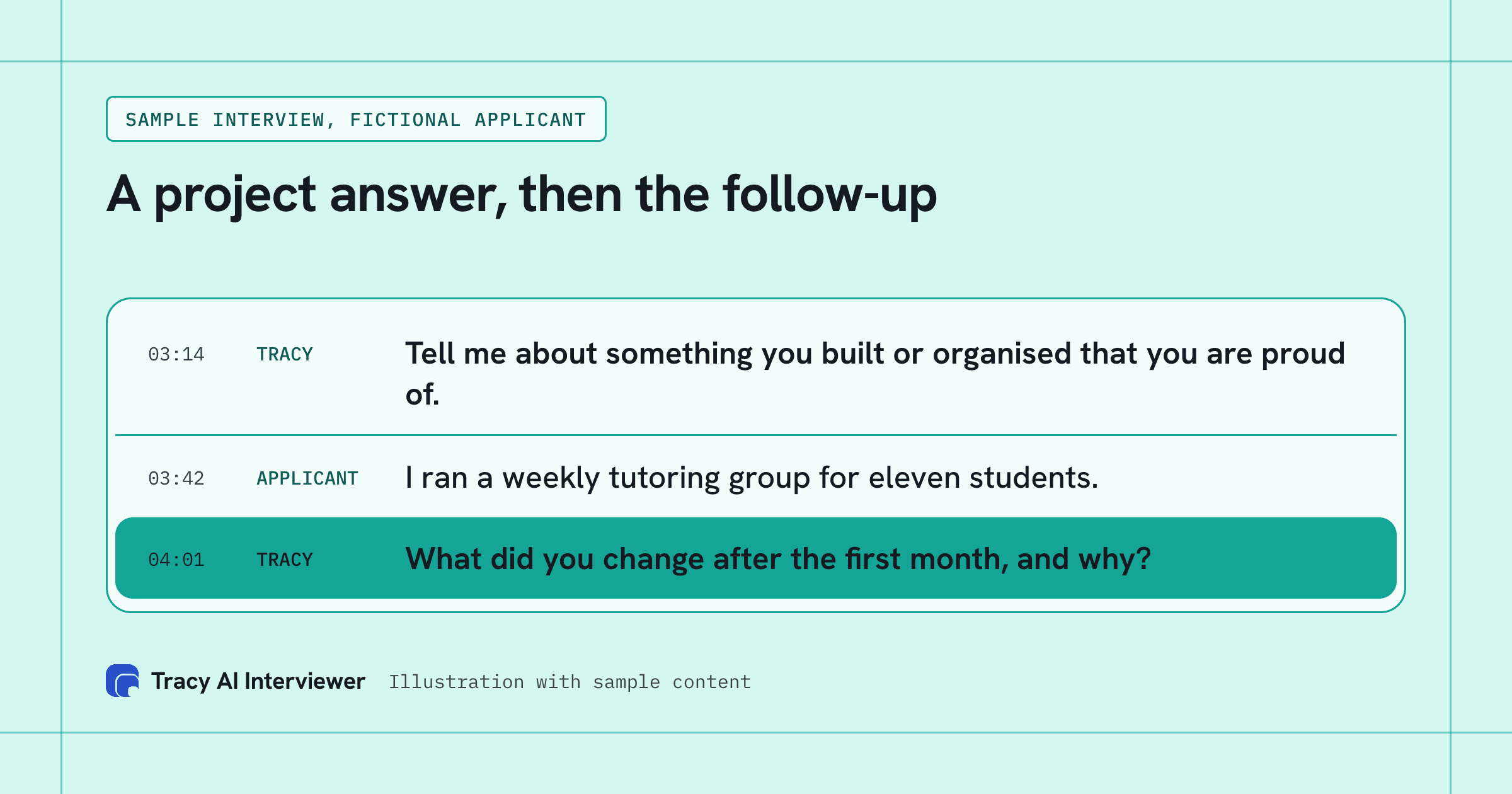
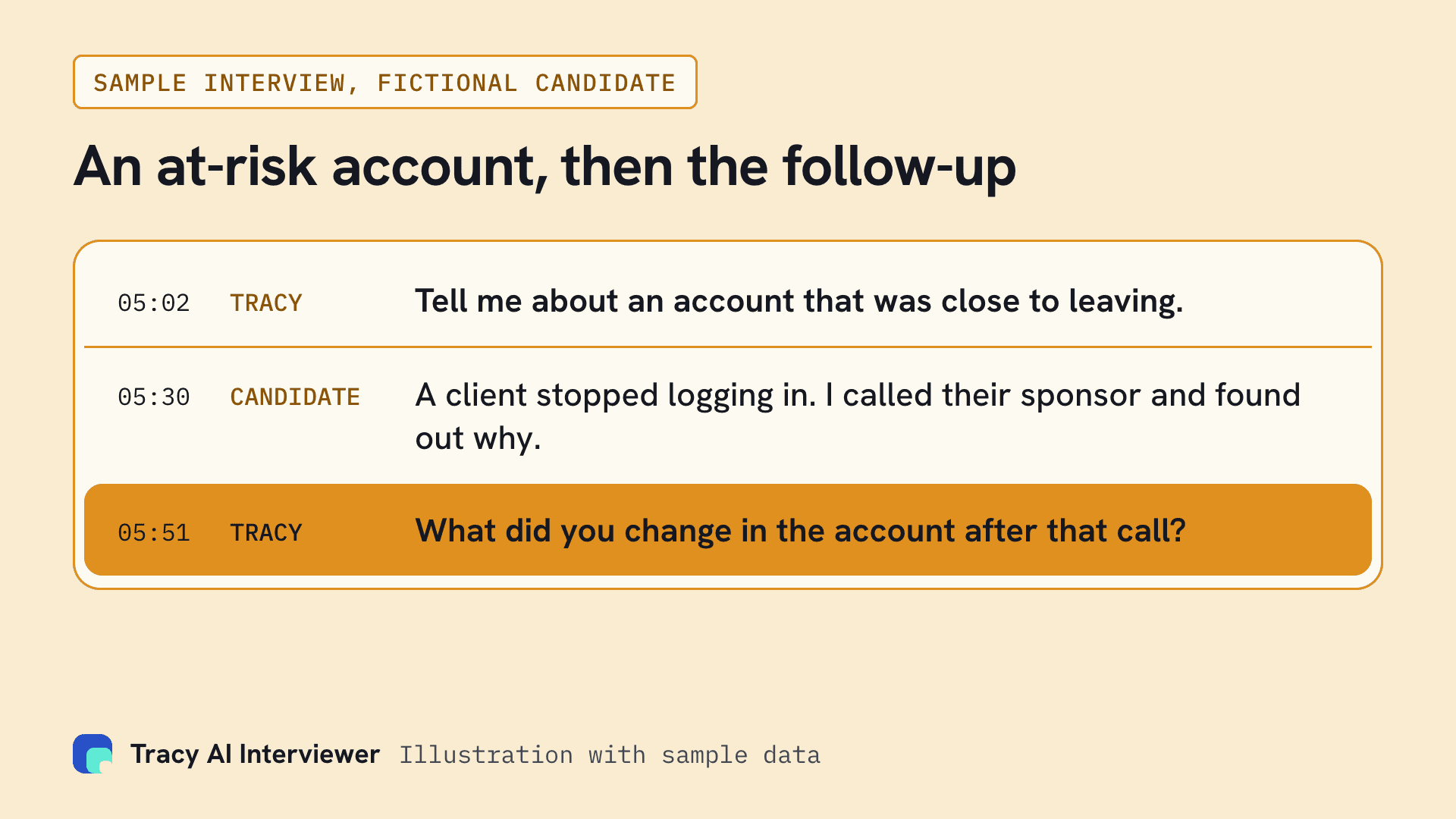
- Follow up on every short answer. "It got fiddly" is a pointer. Ask what they were trying to do, and where it went wrong.
- Read across the interviews. Look for reasons that repeat, quote the words people used, and keep the moment each quote came from, so a colleague can check it.
- Close the loop. Tell the team what changed because of what you heard.
Which customer interview questions work?
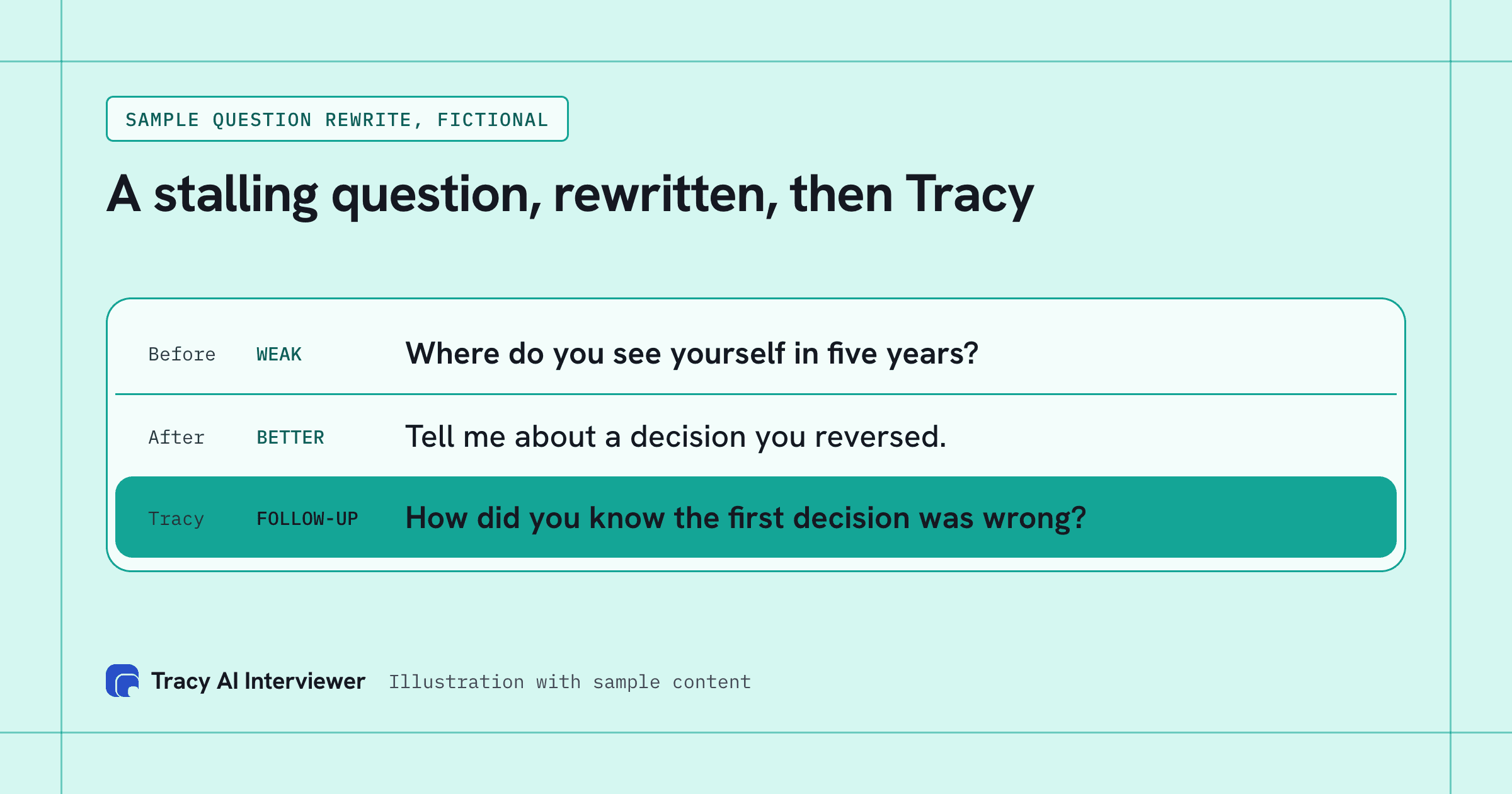
The same few questions work for customer interview questions and user interview questions alike. The follow-up carries the value: it turns an opinion into an example.
A starter set for customer and user interviews. Reword each to your product.
| Question | What it finds | Follow-up |
|---|---|---|
| Tell me about the last time you [did the task]. | The real workflow, not the ideal one | What did you do first? What happened next? |
| What were you using before? | The alternative you compete with | What made you switch, and what almost stopped you? |
| What did you try that did not work? | Failed workarounds and their cost | What did that cost you in time or money? |
| Who else was involved in the decision? | The buying group | What did each of them care about? |
| What would make you stop using it? | The churn trigger | When did you last think about that? |
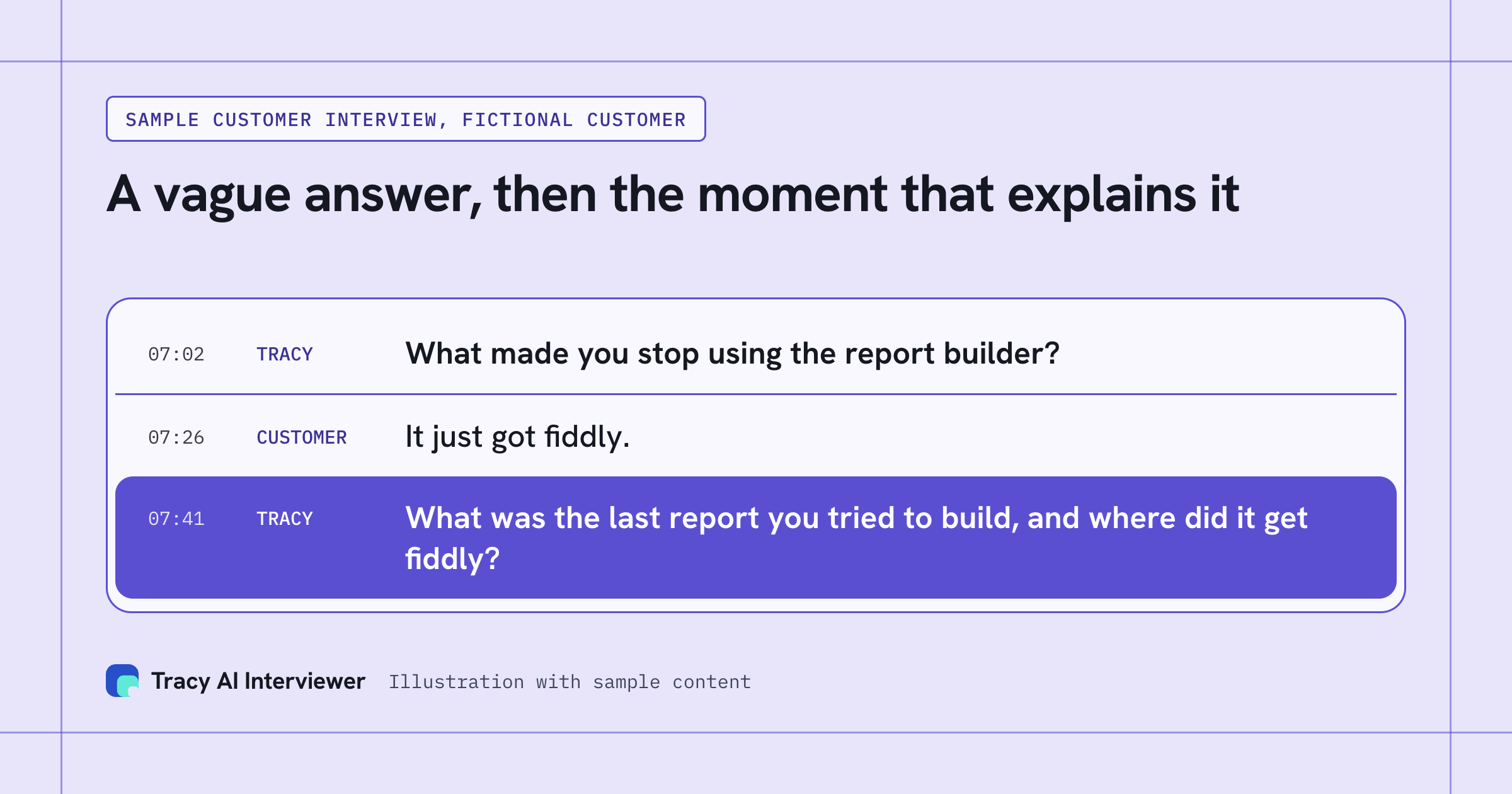
A vague answer becomes a specific example when the interviewer asks for the last time it happened.
How do you read across the interviews?
Read the first three interviews slowly, then write down the reasons you heard in the customers' own words. Group the reasons that repeat, and count how many customers gave each. Keep the quote and the moment it came from beside every group, so a product manager who doubts a finding can check the exact answer. Treat a reason heard once as a lead for the next round, not a conclusion. This is where a shared guide pays off: when everyone answered the same questions, you compare like with like instead of weighing different conversations.
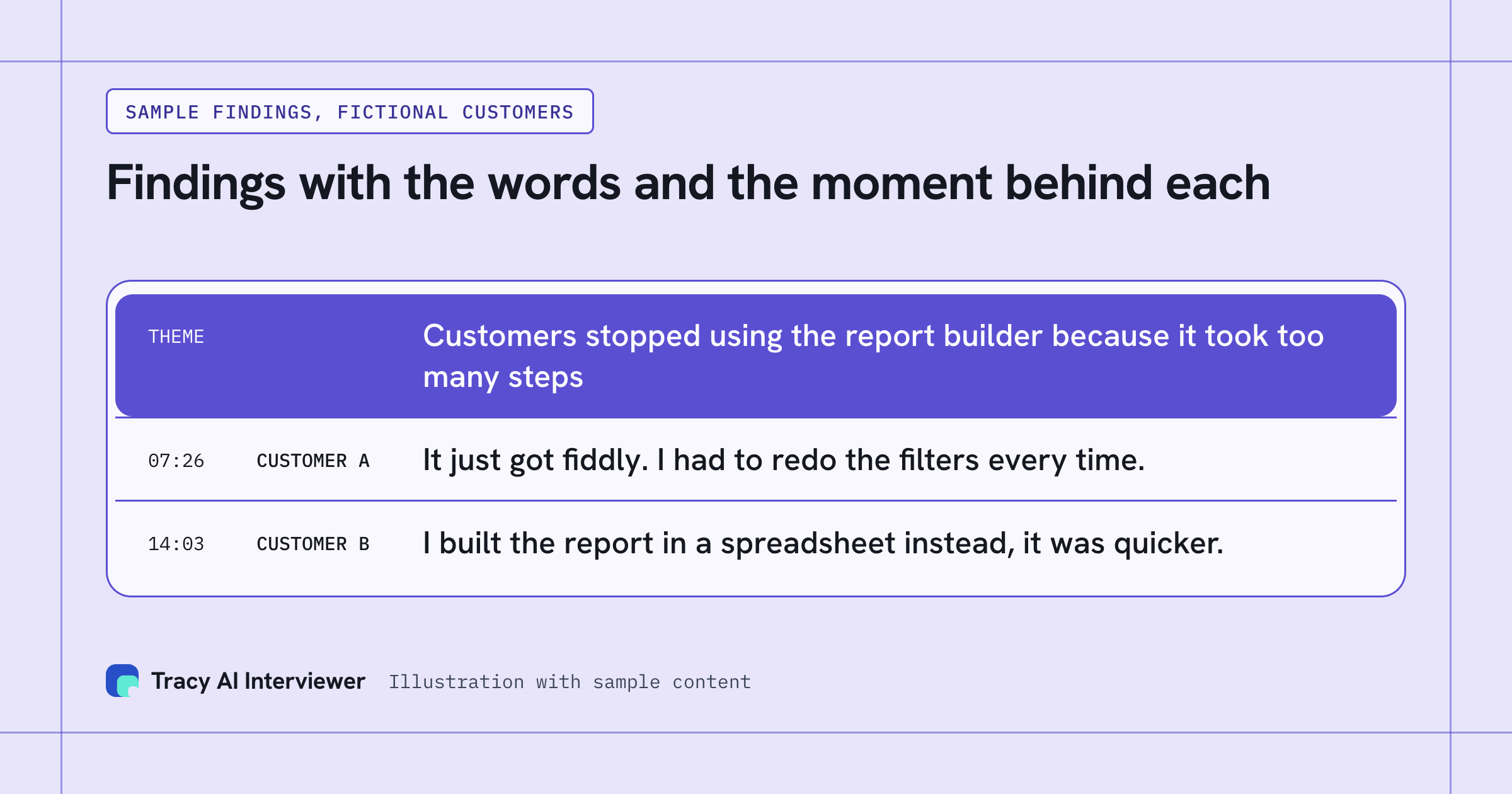
A finding comes with the customers' own words and the moment each was said.
What mistakes spoil customer interviews?
Four habits ruin otherwise good interviews:
- Leading questions. "Would a faster export help?" invites a yes. Ask what they do after the export.
- Pitching. Once you describe your idea, people react to it politely. Describe the problem instead.
- Hypotheticals. "Would you pay for this?" measures manners. Ask what they paid for the last similar thing.
- Different guides for different people. If each interviewer asks in their own order, the answers cannot be compared.
Note-taking is the last trap. An interviewer who writes while listening drops the follow-up. A recording with a transcript lets you listen first and read later.
How does Tracy run customer interviews?
Tracy runs the method above from one link. You describe what you want to learn and she drafts the interview guide, or you supply your own questions. You send one link, and customers join in their browser when it suits them, with no account needed. Every customer gets the same guide, so answers compare. She follows up on what each person says, and you read across the interviews: each finding links back to the words and the moment in the recording. The customer research page shows the sample report, and how AI interviews work covers what a customer sees.
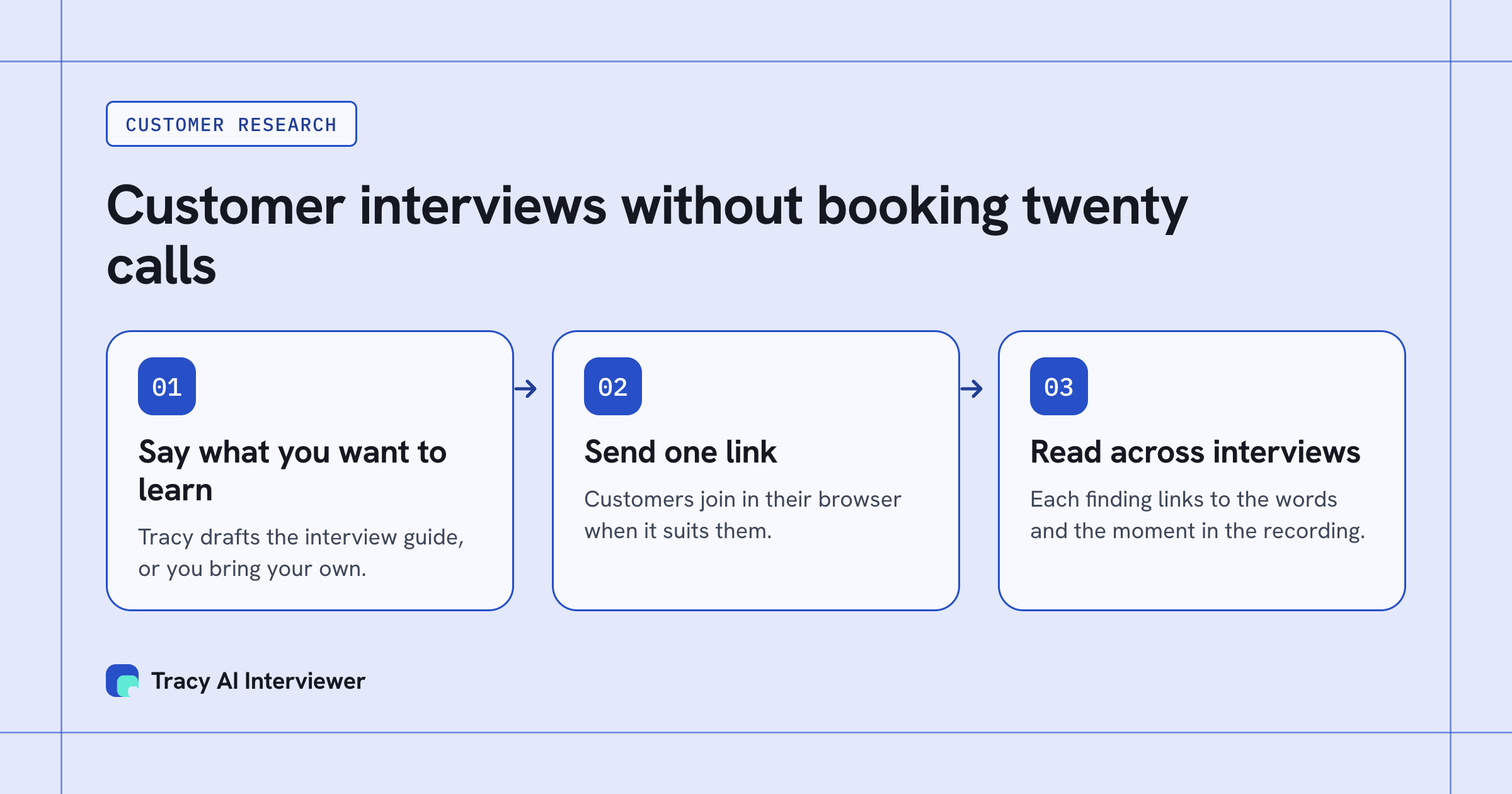
Three steps replace the booking: say what you want to learn, send one link, read across the interviews.
How to pilot it
Start with one question and one list of customers: churned accounts, last quarter's lost deals or new sign-ups. Create the interview, send the link, and read the first results before you widen. Stop when the answers repeat. A person still decides what to build or change, and what to tell the team; Tracy does the asking and keeps the record. Pricing is per interview, so a small pilot costs little.
If you run check-ins or exit interviews instead, see the people teams page.
Common questions
How do you run user interviews?
What are good customer interview questions?
How many customers should you interview?
Can an AI interviewer run customer interviews?
Try Tracy on your next role
Tracy interviews every applicant, asks follow-up questions and sends you a ranked shortlist.
Try it free (opens in a new tab) Book a demo (opens in a new tab)
Your first 3 results are free. No card needed.
Sources
- Tracy AI Interviewer: Customer research, retrieved 9 Nov 2026.
- Tracy AI Interviewer: Pricing, retrieved 9 Nov 2026.