In short
Win-loss analysis software collects why buyers chose you or a rival and turns the answers into findings. Tracy AI Interviewer runs the buyer interview itself: it drafts the guide, each buyer joins in the browser when it suits them, and every finding links back to their words in the recording.
Clozd and Klue fit teams that want a vendor running a win-loss program, Crayon and Gong fit teams that start from competitive or call data, and Dovetail analyses interviews someone else holds.
Tracy's first 3 results are free, with no card.
The tools below answer one question in different ways: why did this buyer pick us or someone else? The six are ordered by how directly each one collects the buyer's own reason. Interview-based tools come first, then tools that analyse conversations you already hold, then tools that report win-loss as a metric. Tracy leads for research teams because it is the one entry here that interviews the buyer for you and links each finding to the moment they said it. For the method behind it, read how to run win-loss interviews.
What is win-loss analysis software?
It is software that gathers the reasons behind closed deals, won and lost, and organises them so a sales, product or research team can act on them. The reasons come from buyer interviews, from call recordings, from CRM fields or from a mix. A CRM tells you a deal was lost, and the buyer tells you it was lost to an accounting integration that took no extra work. Teams usually weigh three things: who asks the buyer, how soon the finding reaches the team, and what a program costs once it runs every quarter.
Which win-loss analysis tools are worth a look?
Tracy first, then the order described above. Vendor home, help and pricing pages, read 23 Nov 2026. Not stated means the pages read give no figure.
| Tool | How it hears the buyer | Pricing |
|---|---|---|
| Tracy | An interview it runs, one link per buyer | $1 per credit; 3 results free |
| Clozd | A Clozd interviewer, or an AI agent | Not stated |
| Klue | AI agents that capture buyer feedback | Not stated |
| Dovetail | Analyses interviews and calls you hold | From $4,800 a year plus credits |
| Gong | Win/loss analytics on closed deals, from its deal and call data | Not stated |
| Crayon | Win/loss as a competitive metric | Not stated |
Win-loss software or a service?
Both exist. Clozd's page describes software and services, with a seasoned interviewer who runs a 30-minute conversation with your buyer, and an AI agent option that listens and asks follow-ups. That suits a team that wants the program run for it. Tracy is self-serve software: you send the link to the buyers you want to hear from, and it holds the conversation. Klue sells win-loss alongside competitive intelligence on one platform. A service often costs more per interview and takes less of your time, so the choice depends on how many interviews you want each quarter and who on your team will read them.
What does win-loss analysis software cost?
Four of the six vendors publish no price on the pages read: Clozd, Klue, Crayon and Gong each point to a demo or a proposal, so ask what a program of 100 interviews a year costs. Dovetail lists Bronze at $4,800 a year plus 15 cents a credit, with a transcript or recording costing 1 credit to process, for up to 5 users. Tracy charges $1 per credit, one credit per started 20 minutes: 100 buyer interviews of 20 minutes cost $100. Dovetail analyses interviews and Tracy runs them, so on that reasoning a Dovetail program also needs someone to hold the interviews.
Tracy AI Interviewer
- Verdict: Runs the buyer interview. Tracy drafts the guide from what you want to learn, or uses yours, and each buyer joins in the browser when it suits them, with no calendar. Each finding links back to the words and the moment in the recording.
- Best for: Research and product teams that want win-loss interviews at a volume a calendar cannot hold. See AI customer interviews.
- Trade-off: You send the link to the buyers you want to hear from. Tracy reports what each buyer said and leaves the conclusions to your team.
- Price: $1 per credit, no seats.
Here is the kind of note a team reads, from an invented buyer.
Question: Why did you choose the other vendor?
Summary: The buyer picked another vendor because it connected to their accounting tool without extra work.
Quote, 01:40: "It connected to our accounting tool with no extra work."
Tracy's follow-up: Who made the final call?
This is sample data. The sales team reads the stated reason and the follow-up on who decided, from a call the buyer took at their convenience.
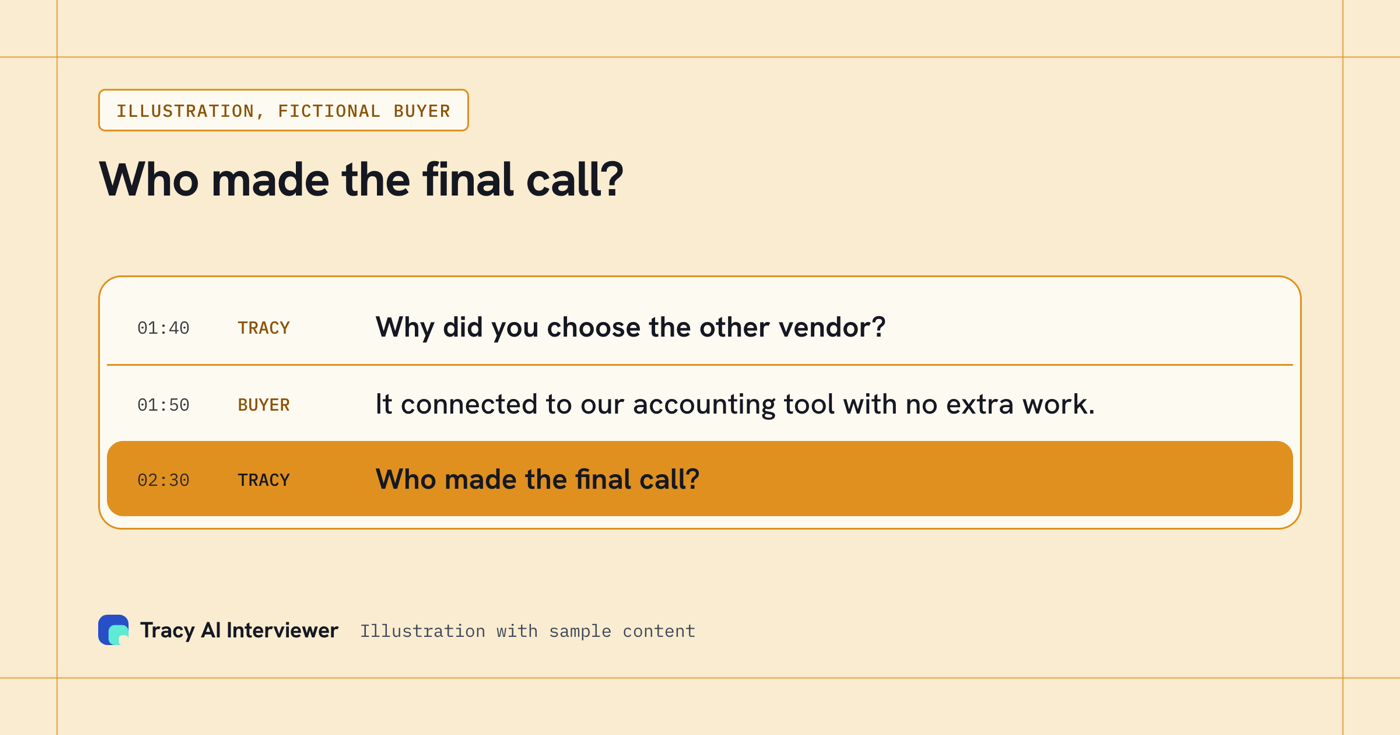
The follow-up finds who made the final call, and the answer is timed.
The six, in order
1. Tracy AI Interviewer
- Why first: It is the only entry that runs the interview for you and ties each finding to the buyer's own words.
- Verdict: Self-serve buyer interviews on the buyer's schedule.
- Best for: Teams that want many buyer interviews without booking calls.
- Trade-off: Self-serve, so your team chooses who to invite and reads the results.
- Price: $1 per credit.
2. Clozd
- Why second: It also interviews the buyer, with a human interviewer or an AI agent, and sells software and services.
- Verdict: Win-loss software plus interviewer-led conversations.
- Best for: Teams that want a specialist to run the program.
- Trade-off: Pricing is not stated; the page points to a demo.
- Price: Not stated.
3. Klue
- Why third: Its AI agents capture what buyers say, but win-loss sits beside competitive intelligence on one platform.
- Verdict: Competitive intel and win-loss from one platform.
- Best for: Product marketing and sales enablement teams that also track rivals.
- Trade-off: Pricing is not stated on the home page.
- Price: Not stated.
4. Dovetail
- Why fourth: It analyses interviews rather than holding them, so the buyer's reason reaches it second hand.
- Verdict: Transcribes and analyses interviews, calls and tickets, with MCP connectors to Claude, ChatGPT and others.
- Best for: Research teams that already run interviews and need a place to analyse them.
- Trade-off: Credits are charged per transcript or recording on top of the platform fee.
- Price: Bronze $4,800 a year plus credits at 15 cents each.
5. Gong
- Why fifth: Its Help Center documents win/loss analytics on closed deals, reported against deal activity such as contacts, call counts and competitor mentions rather than asked of the buyer.
- Verdict: Revenue AI built around sales calls, email and meetings, with win/loss analytics on Forecast plans.
- Best for: Sales teams that want deal evidence from conversations they already record.
- Trade-off: Pricing is by proposal.
- Price: Not stated.
6. Crayon
- Why last: Win/loss analysis is listed under performance metrics inside competitive intelligence.
- Verdict: Competitive intelligence software that monitors competitors.
- Best for: Competitive teams that want to see which rivals cost the most deals.
- Trade-off: Pricing is not stated; the page offers a demo.
- Price: Not stated.
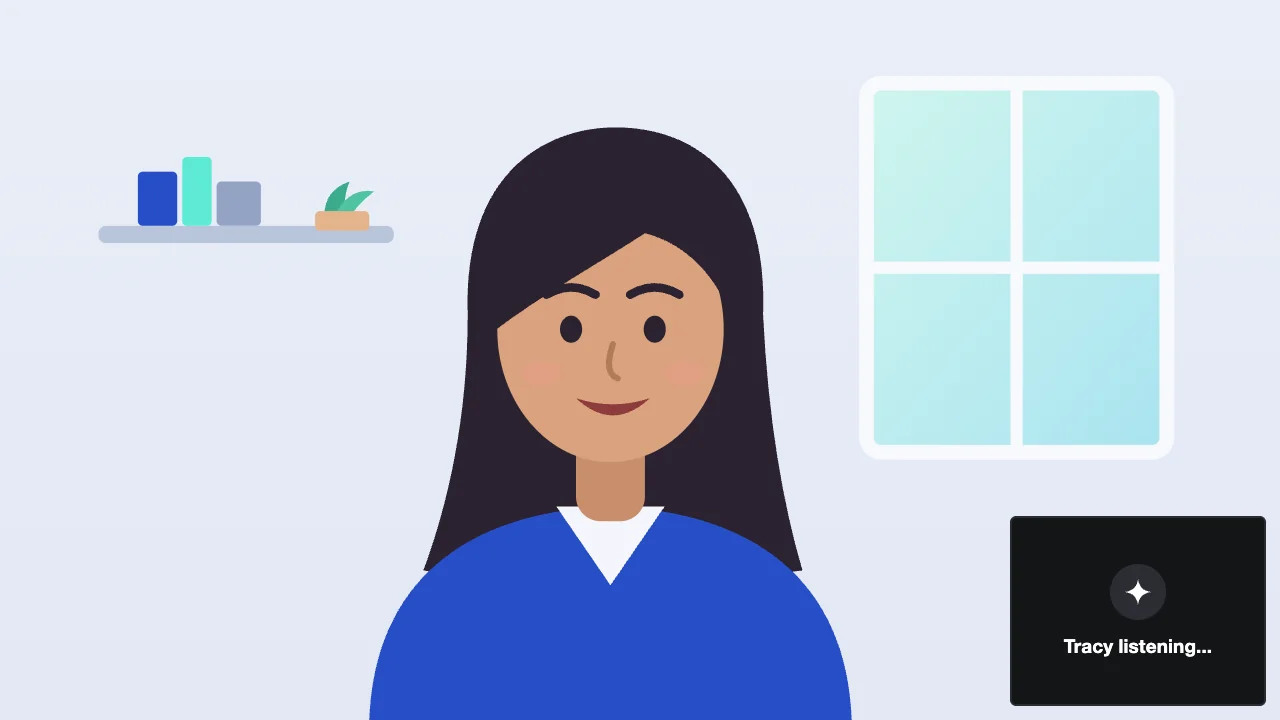
The buyer joins from a browser link and talks to Tracy on video.
Which path fits you?
- Running win-loss without a program: win-loss analysis, how to interview buyers.
- Broader customer interviews: best customer interview software and best user research tools.
- Questions to ask: customer discovery interview questions.
- Using Claude for competitor work: Claude for competitive analysis.
- Customer research with Tracy: Tracy for customer research.
Common questions
What is win-loss analysis software?
Software or service?
What are the best win-loss tools?
Can Tracy decide why a deal was lost?
Hear the reason behind every answer
Send one link: Tracy interviews customers when it suits them and links each finding to their words. First 3 results free.
Try it free (opens in a new tab) Book a demo (opens in a new tab)
Your first 3 results are free. No card needed.
Sources
- Clozd, Win loss analysis software, retrieved 23 Nov 2026.
- Tracy AI Interviewer, Pricing, retrieved 23 Nov 2026.