In short
Tracy AI Interviewer runs and records the first round for every applicant, asks follow-ups on the person's own answers and shows signals with their times, so a reviewer has evidence to compare when a later round does not match.
Proxy interviews are interviews where someone other than the applicant answers, or feeds answers from off camera.
Identity is checked as a separate step, and a person decides from the evidence.
Next step: send us one role and see the evidence on one interview.
We make Tracy AI Interviewer.
What are proxy interviews?
A proxy interview is an interview in which someone other than the applicant takes part. Either they answer in the applicant's place, or they supply answers from off camera while the applicant appears on screen. Proxy interviews are described in several ways, so it helps to separate them before deciding what to check.
- Stand-in. A different person takes the interview, and the applicant, or someone else, starts the job.
- Live helper. The applicant is on camera and another person feeds the answers. The search term "proxy interview support" is used for this.
- Relay across rounds. One person does the screening interview and another does the technical round.
- Impersonation. The applicant uses someone else's identity, name and personal data. Candidate impersonation is the wider term.
The four overlap, and one case can combine them.
What the FBI says about someone else attending an interview
The FBI's Internet Crime Complaint Center has described the pattern in a specific scheme. Its 16 May 2024 alert says that US-based facilitators of North Korean IT workers provided services that included attending "virtual interviews and meetings on behalf of North Korean IT workers", alongside receiving company laptops, setting up remote desktop connections and creating accounts on job sites. The same alert says companies that outsource IT work to third-party vendors "can face additional vulnerabilities since these companies are removed from the direct hiring process".
The 2022 alert describes stolen personal data used to apply for remote jobs, with background checks finding data that belonged to another person. These alerts cover one set of cases. They give no rate, so this page does not either. They do show that someone else attending an interview is a documented tactic and not a thought experiment.
How to spot a proxy interview
No sign settles the question, so the table pairs each one with the kind of proxy it points to and where it comes from.
| Sign | Which kind it points to | Where it comes from |
|---|---|---|
| Cannot discuss their own CV one level deeper | Stand-in or live helper | Our practice. The FBI lists trouble with key details of the person's past |
| Extra noise, or sounds as if others are doing similar work nearby | Live helper or a group working together | FBI IC3, 16 May 2024 |
| A pause before most answers, gaze that looks abnormal | Live helper feeding answers | Tracy signals: delay before answers, gaze |
| The person in round two sounds or knows differently from round one | Relay across rounds | Our practice. A recording of round one makes the comparison possible |
| The same phone number or email on applications under different names | Facilitated or organised applications | FBI IC3, 23 January 2025 |
| A new address or payment platform appears during onboarding | Facilitated employment | FBI IC3, 23 January 2025 |
The table lists six signs and what each one points to. The FBI's May 2024 tips also include noting "inconsistencies in interviews, especially applicants being unable to field questions about where they are located or key details about their past". Treat each item as a reason to look closer and not a verdict. Slow connections, shared flats and nervous answers produce several of these signs in honest interviews. Our guide to AI interview cheating detection covers the live-helper case with AI in more depth.
How to prevent proxy interviews
Prevention is mostly process, and it costs little. Steps 4 and 5 are the FBI's advice.
- State the rule in the invitation. Say who may attend and whether anyone may help, and say that the interview is recorded. A rule nobody was told is not one a person broke on purpose.
- Keep a recording of round one and let the next interviewer watch a few minutes of it, so a different voice or a different depth of knowledge is noticed.
- Use questions that need the person's own experience. A follow-up on the answer just given is harder for a helper to cover than the opening question.
- Verify identity as its own step. The FBI's January 2025 advice is to "implement identity-verification processes during interviewing, onboarding, and throughout the employment of any remote worker".
- Do more in person where you can. The same alert advises completing "as much of the hiring and onboarding process as possible in person".
- Apply every step to everyone. A check that only some candidates get is a check on those candidates.
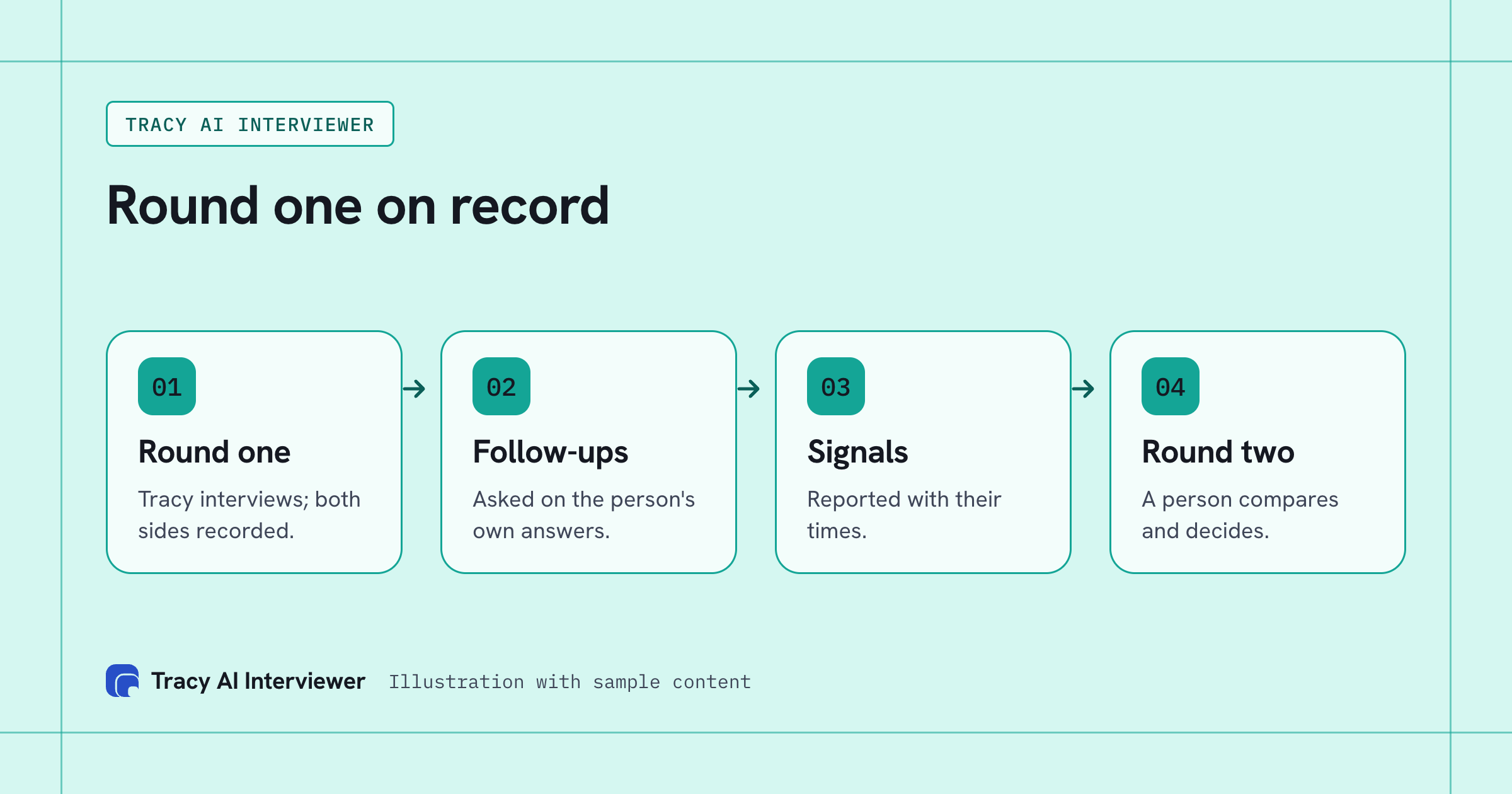
Tracy interviews and records round one, and a person compares it with later rounds.
How Tracy gives a reviewer something to compare
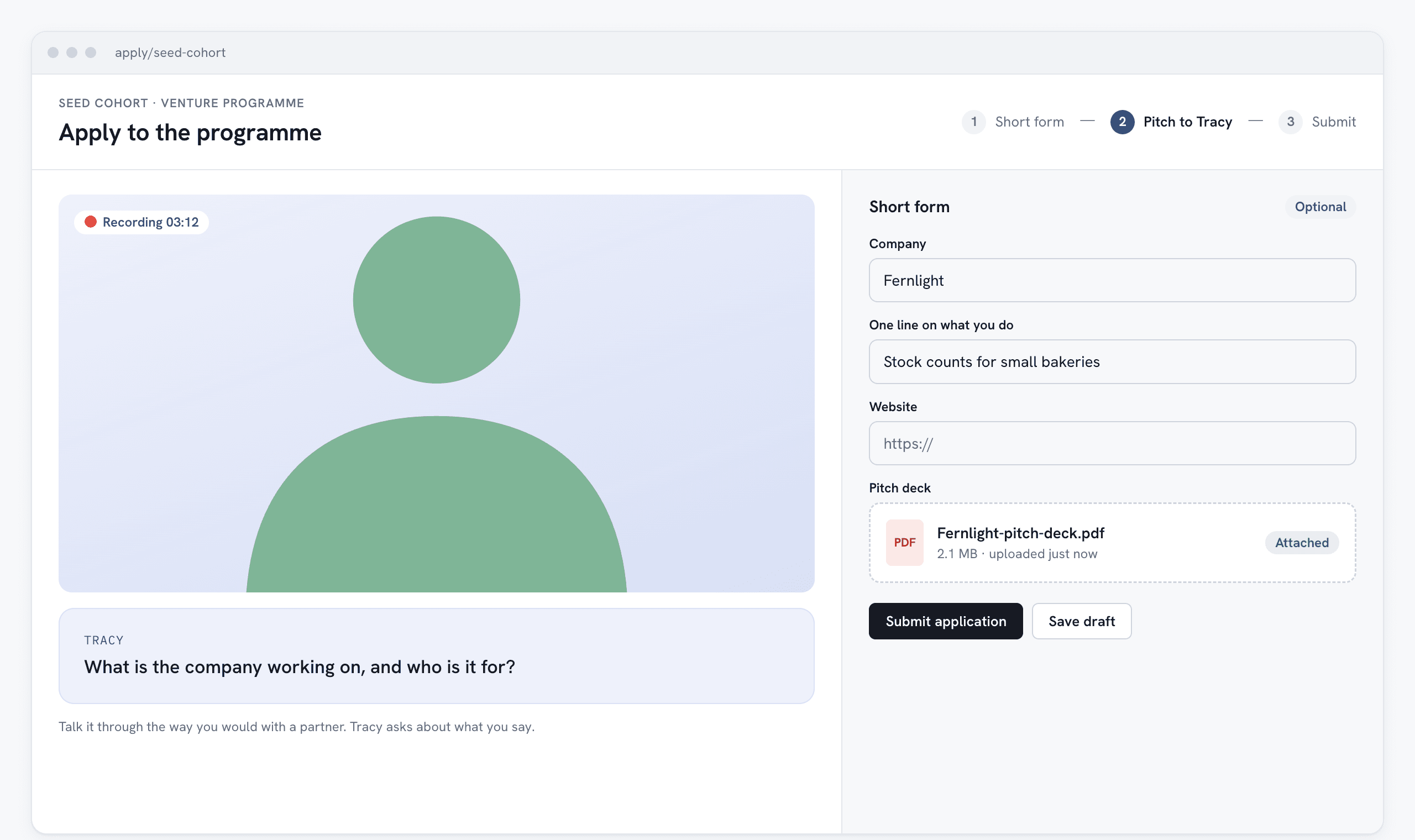
Tracy AI Interviewer runs the first round for every applicant, which matters most in hiring at volume. She asks in the person's own field, follows up on what they said and waits for the answer. A recording of both sides and a timestamped transcript sit behind each result, with a written assessment per question.
When round two is run by a person, they have the first interview to compare against. Identity is checked in your own process, and a signal is a reason to look, not a finding that a proxy took part. The person interviewed is told on the join screen that it is recorded and transcribed, and the decision stays with your team.
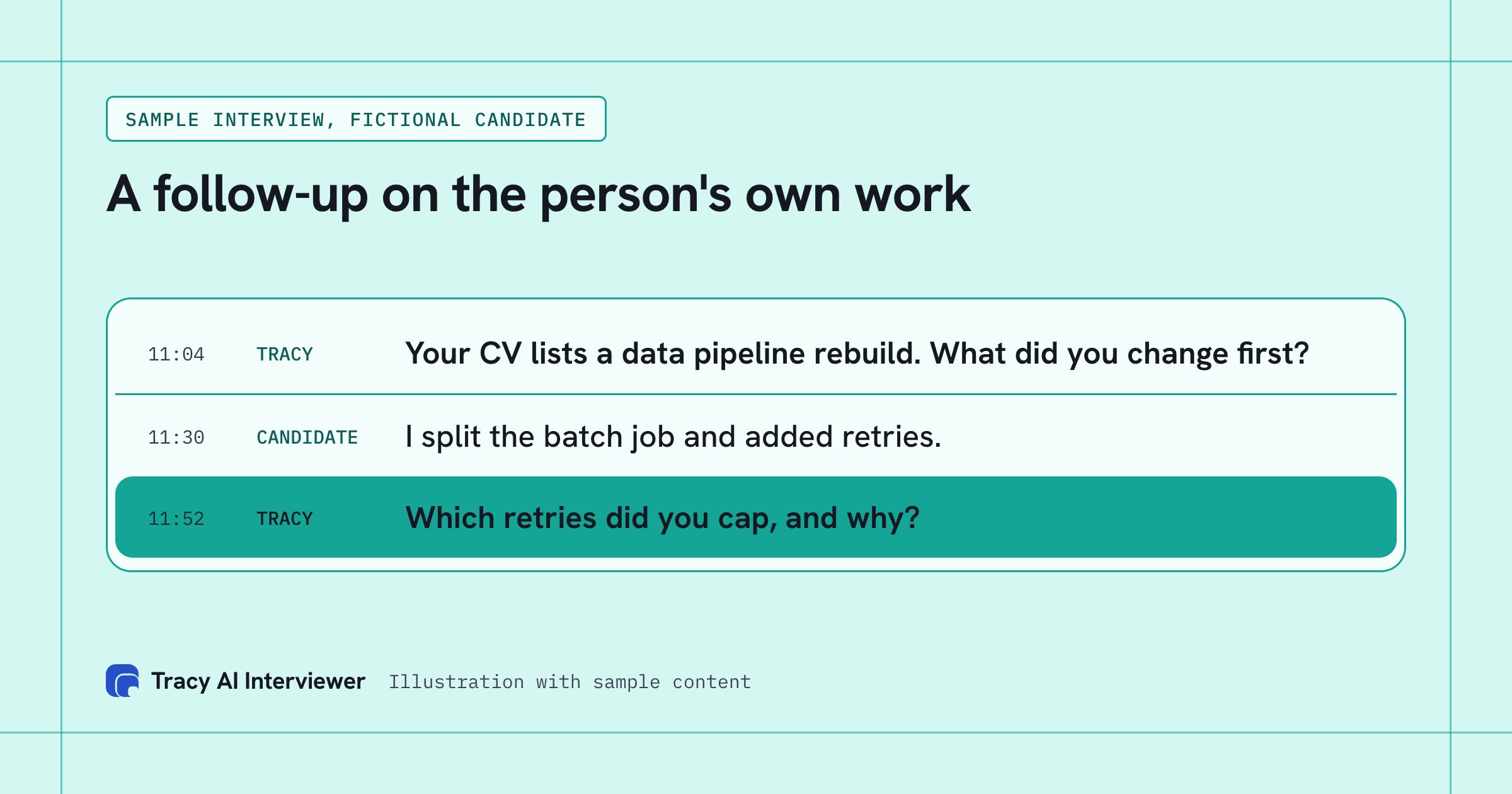
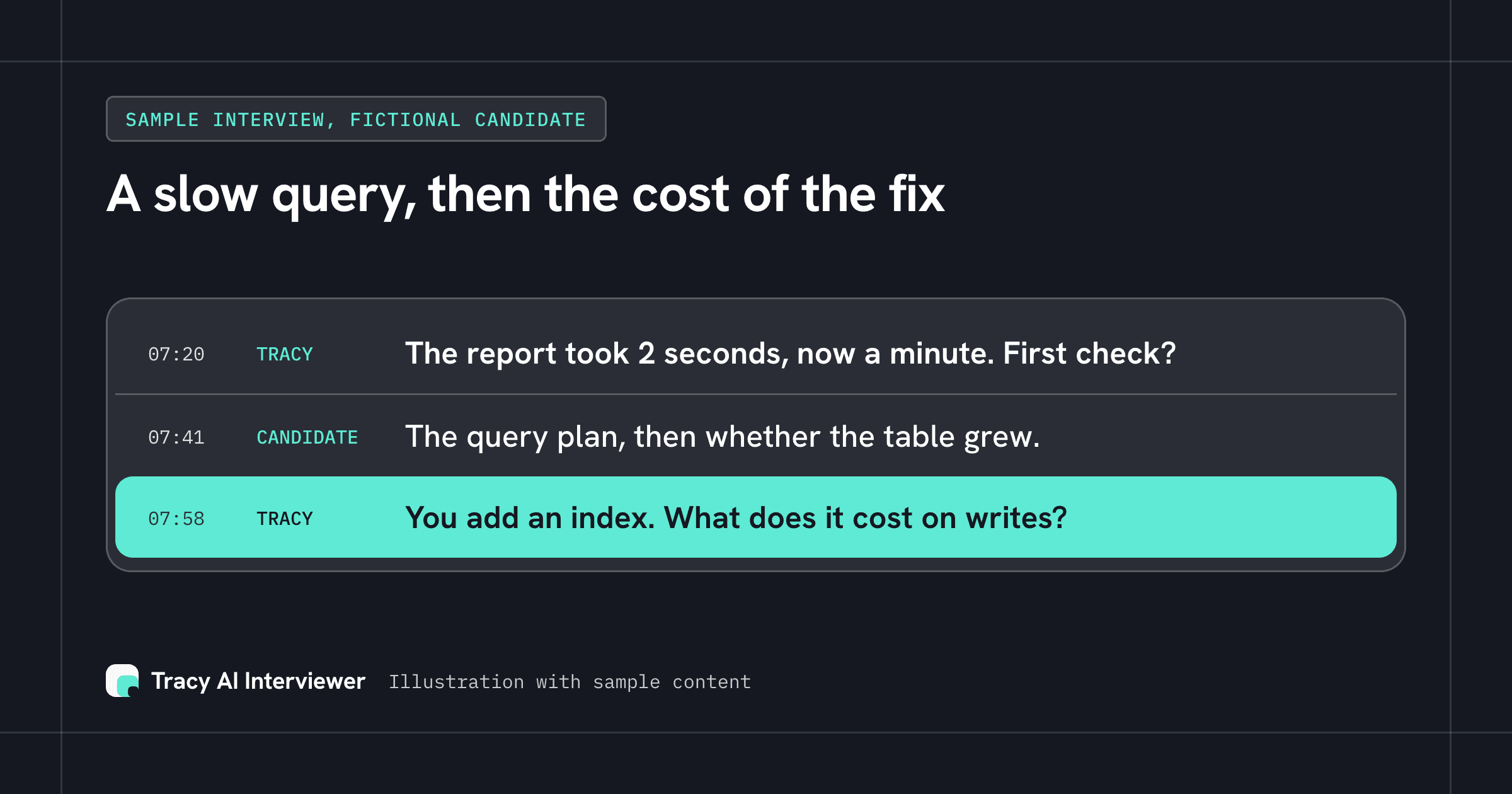
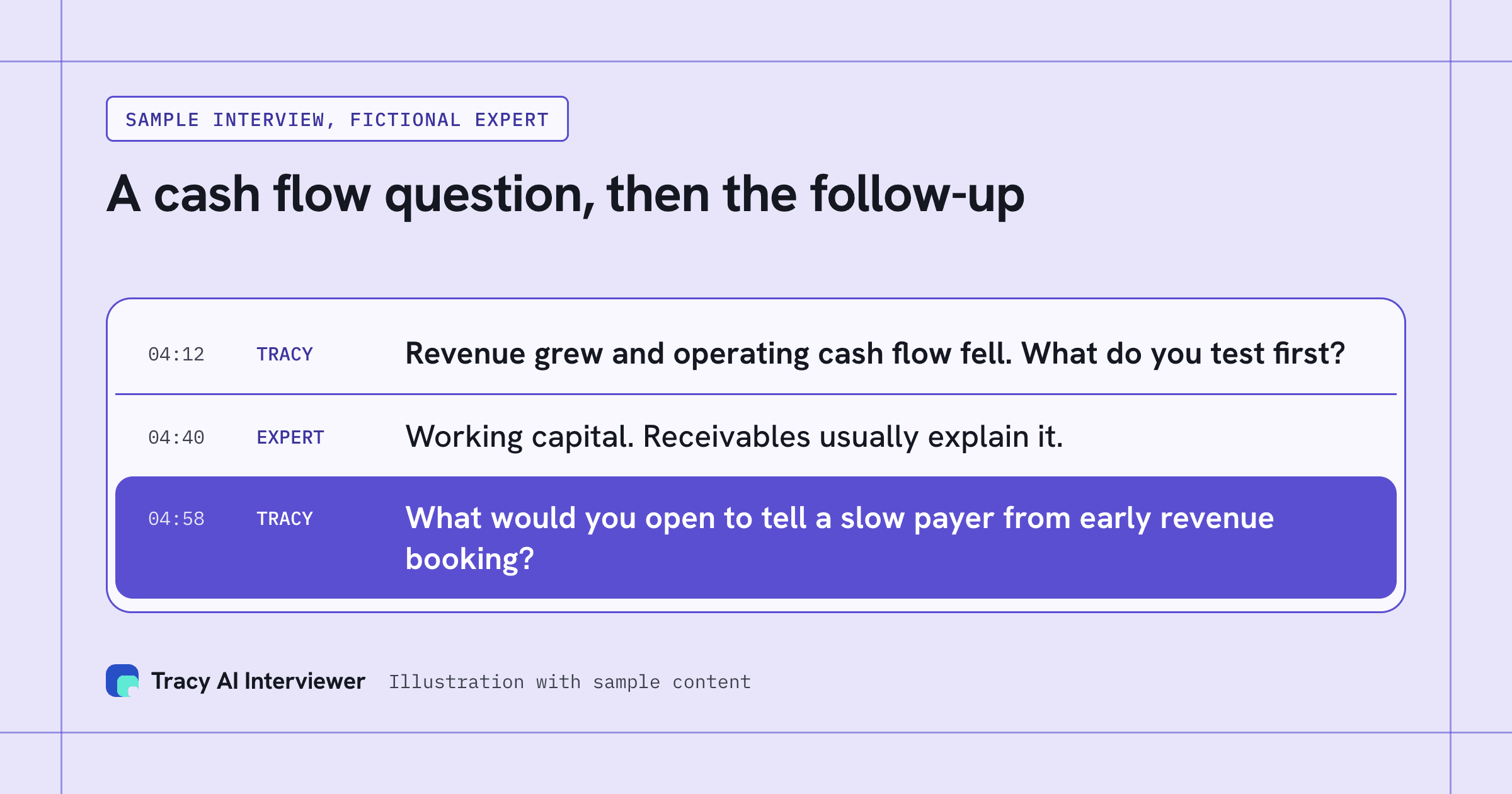
Tracy follows up on the person's own work, which a stand-in or helper has to answer on the spot.
What to do when you suspect a proxy
Read the transcript around the signal, compare how the person explained their work in each round, and run your identity check. Then decide, with the evidence in one place so a second person can review it.
Common questions
What is a proxy interview?
What is proxy interview support?
How can you check for a proxy interview?
What is candidate impersonation?
Can an AI interviewer stop proxy interviews?
Try Tracy on your next role
Tracy interviews every applicant, asks follow-up questions and sends you a ranked shortlist.
Try it free (opens in a new tab) Book a demo (opens in a new tab)
Your first 3 results are free. No card needed.
Sources
- FBI IC3 public service announcement I-051624-PSA, 16 May 2024: North Korea leverages US-based individuals to defraud US businesses, retrieved 9 Nov 2026.
- FBI IC3 public service announcement I-012325-PSA, 23 January 2025: North Korean IT workers conducting data extortion, retrieved 9 Nov 2026.
- FBI IC3 public service announcement I-062822-PSA, 28 June 2022: deepfakes and stolen PII used to apply for remote work, retrieved 9 Nov 2026.